
Lipstick and History
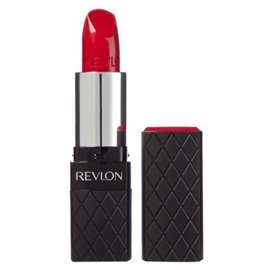 Class was over, but the bell had not yet rung. She pulled her reddish lipstick out of her purse and applied it expertly to her lips.
“How do you do that without a mirror?” I asked.
“I’ve had these lips my whole life,” she said. “When you’re my age, you’ll be able to do that too.” This solidified the “cool” tag I’d already given her.
But it wasn’t just the lipstick application that made her cool. It was also the way she could totally dismiss the “dumb questions” teachers always say don’t really exist with a quick, “Are you kidding?” in one breath and embrace them with the nurturing “Come see me tomorrow at lunch,” in the next. It was the way she could command the attention and respect from a bunch of rambunctious junior high kids by just walking into the room. It was the way the crowd in the hall parted with a cheerful “Hey, Mrs. Arrington” or a “Move! Don’t bump into Mrs. Arrington” when her beige, willowy frame exited her room to do whatever teachers did when they weren’t teaching. It was the way she could make us feel like history mattered because she cared so much about the subject herself.
Mrs. Arrington was definitely not “sugar and spice and everything nice.” She was political when kids didn’t quite understand the nuances of her messages. She was defiant. I can remember her teaching us Ebonics much to the chagrin of some of the more “eloquent” black folks in the neighborhood. And she could totally cut a kid in half just by the way she looked at him. To my twelve year old self, she was greatly entertaining, smart, and brave, and I wanted to be just like her when I grew up.
I always knew that Mrs. Arrington did not just “wing” her lessons. They felt connected and prepared for. I can’t ever remember doing a traditional worksheet in her class, and even when we had seat work to do, she actually walked the room helping kids out because, quite frankly, that stuff was hard. I mean, she actually expected us to think! Most of our other teachers must have forgotten that we were “gifted” because we had time to sing the latest R&B hits (“Knockin’ the Boots” was huge that year), throw M&Ms at the science teacher’s back while she wrote on the board (not me, by the way), and still give a half-assed effort, earning A’s and B’s. Mrs. Arrington was not having any of those shenanigans in her class, and the way she talked to the parents whose kids didn’t score well let us all know that she wasn’t scared of anything or anybody. That meant if we wanted to do well, we actually had to learn and prove our learning to her. Needless to say, all those left over M&Ms stayed in backpacks until science class the next day.
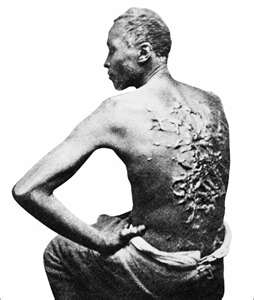 She even taught us the stuff behind the words in our textbook. You remember the one paragraph blurb about slavery in seventh grade history texts? She actually did a whole unit on it.”Now let’s go back to the book,” she said weeks after we first read that paltry retelling. “Why do you think they would sell a book to impressionable young students that intentionally leaves out so much?”
“They don’t want us to know our history,” one shouted out.
“Why?”
“They don’t want us to know how strong we were and still are deep down inside,” another shouted.
“Why?”
“They want to control us!” another added.
“Why?”
“‘Cause then we aren’t a threat,” from yet another. The bell rang, and a bunch of newly militant twelve year old black kids entered the halls angry and swearing that we wouldn’t let anyone tell us what our history is without learning about it for ourselves. She was innovative and passionate, and to a bunch of kids who had about as much passion as a flea, she was inspiring. She made us want to learn, want to think, want to feel.
We had been learning about the Civil Rights Era, and she had been promising us that she would show the “I Have a Dream” speech to us. Every kid in America could pick Dr. Martin Luther King, Jr. out of a photo line-up, but not many could tell you what that speech was really about. This, to Mrs. Arrington, was a travesty, and it was her personal mission to show us the film footage of that speech to enlighten our ignorant minds. We had heard all day that she had shown the speech (we had her last period), so as we approached the darkened classroom, we knew that we were in for something special. Nobody divulged, though, what that special something was.
Mrs. Arrington stood stoically in front of the room as we entered. The TV/VCR set-up was just to the left of her. Everyone entered and sat down without a lot of chatter. We knew better. Once the tardy bell rang, indicating the official start of class, she dove into her obligatory message about the historical importance of this speech. She implored us to watch Dr. King’s face as he spoke, the reaction of the audience, and to just try to imagine what this speech meant to Americans in the midst of everything we’d been learning about in class. These directives would have been followed by heads landing squarely on desks and short naps being taken if any other teacher had given them, but for her, we wanted to do it right.
She told us to take out our notebooks to capture any thoughts we had before she walked solemnly toward the “technology.”
“Are you all ready?” she said as she was pressing the play button, not giving us enough time to reply. She moved stealthily out of the way, giving kids who had reaped the benefit of such inspiring words a glimpse into another time.
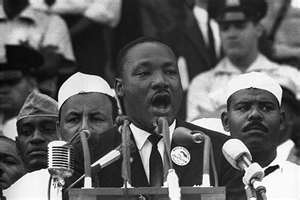 “I am happy to join with you today in what will go down in history as the greatest demonstration for freedom in the history of our nation,” he began. “Five score years ago, a great American, in whose symbolic shadow we stand today, signed the Emancipation Proclamation. This momentous decree came as a great beacon light of hope to millions of Negro slaves who had been seared in the flames of withering injustice. It came as a joyous daybreak to end the long night of their captivity.”
We didn’t understand every word, or even every reference in that speech, but we did understand the overall message, the significance of that place and time to each of us seated in that room, the supreme love and unwavering commitment to justice he and everyone who had marched with him, both in Washington and in the South, possessed. I remember being moved, so much so that I could not take any notes.
Being particularly overcome, I looked away from the screen trying to see if my classmates were as moved as I was. Even in the darkness of the room, I could tell that everyone was glued to the speech. Then I looked toward the front of the room. Mrs. Arrington was quietly sobbing into a tissue, eyes fixed to the screen. In that moment, I wondered how it was that she could have taught this same lesson all day and still be so overcome that she cried. To this day, I don’t know if Mrs. Arrington should have had a career as an actress or not, but I like to think that the words spoken to that crowd, which seemed like a million years ago to our young minds, still touched something deep inside her core. Seeing her with that tissue compelled tears to run freely from my eyes, and the blur of the screen and the clarity of King’s final words in my ears still find their way to the surface of memory from time to time.
I’m working in a new school, trying to learn all I need to learn about leading teachers. I pull up to this school everyday, look myself in the mirror, and pray that God blesses me with the knowledge to do a great job on behalf of children, especially those most in need of quality educators and curricula. I pull out my reddish lipstick and begin to apply it to the lips I’ve had my entire life. Realizing that I’ve somehow smeared Revlon on my chin, I look into the rear-view mirror to do it the right way. I grab a tissue to erase cosmetic mistakes, and I remember the confidence, planning, and passion Mrs. Arrington carried every day into her classroom. And I hear her say, “When you get my age, you’ll be able to do that too.”
Well, I may not be able to do that lipstick trick, but I think I’ve got that passion thing down!
 Memos from the Middle